How Home Nurses Manage Diabetic Medications
- Diabetic Home Care Team

- Jul 8, 2025
- 3 min read
I know you're tired. You're doing your best. Juggling doctor visits, blood sugar readings, grocery lists full of low-glycemic foods your dad won’t eat, and that constant, low hum of “am I doing this right?”
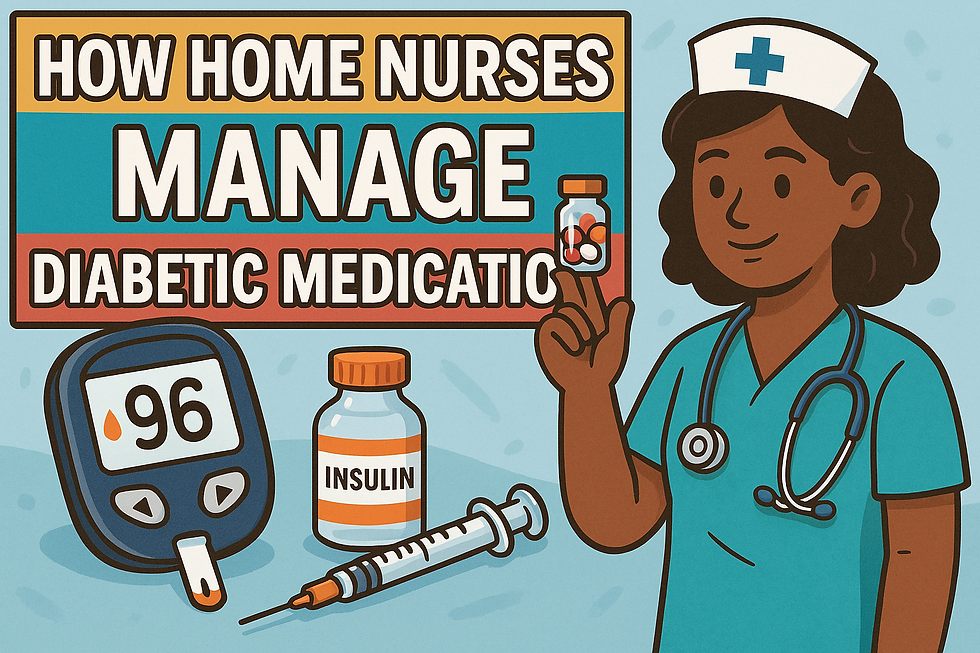
You are. But it’s a lot. And when diabetes is in the picture, especially with an aging parent, it can feel like trying to hit a moving target in the dark.
That’s where we come in. Home nurses don’t just show up with a kit bag and a clipboard. We come in with eyes wide open. We watch for signs your mom’s sugar is creeping up, for that little tremble in her hand before lunch, for the bruises that tell us she’s been injecting in the same spot too often. It’s not just about giving insulin. It’s about managing the whole dance — timing, dosage, food, activity, and how her body is actually responding.
Let’s break it down.
1. We Respect the Routine, but We Watch the Person
The doctor's orders might say 10 units of insulin before breakfast. But what if she didn't eat? What if she's feeling dizzy or skipped dinner last night?We don’t blindly follow the schedule. We adapt, carefully.According to the Mayo Clinic, both hypoglycemia (low blood sugar) and hyperglycemia (high blood sugar) can be dangerous, especially in seniors whose bodies don’t bounce back the way they used to. Symptoms might be vague, like fatigue, confusion, or slurred speech. You might think it’s aging. But a nurse knows when it’s a sugar crash.
We check glucose levels before every insulin dose. No guessing. No “she looks okay.” We know better. We’ve seen the looks that hide trouble.
2. We Handle Meds Like a Hawk Handles Prey
Type 2 diabetes in older adults usually means multiple medications. Oral pills like metformin. Maybe some sulfonylureas. Sometimes even once-a-week injections like dulaglutide (Trulicity). Add hypertension meds, cholesterol meds, and a touch of arthritis pain relief. Suddenly it’s a juggling act.
Our job is to keep that cocktail from turning toxic.We track timing, interactions, and side effects like it's second nature. If metformin is causing too much stomach upset, we bring it up. If your dad’s BP meds are dropping his pressure too far alongside his diabetic pills, we speak up.
We don’t just administer. We advocate.
3. We Watch the Food Like a Fly on the Wall
Home nurses work closely with caregivers to make sure meals match the meds.That means keeping your mom from eating a full plate of rice right before bedtime insulin. Or worse, skipping carbs altogether and risking a hypoglycemic episode at 3 a.m.
We help balance the plate.
Complex carbs instead of just cutting sugar
Small, regular meals instead of skipping and stuffing
Water intake, since dehydration can push blood sugar up
And the occasional reminder that sugar-free doesn’t mean safe to binge
We’ve learned to speak both the language of food and the dialect of what she’ll actually eat. If she hates oats, we don’t force oats. We find something else.
4. We Document Everything. But Not Like Robots
We track blood sugar patterns. We write down mood changes, appetite dips, and how often she’s going to the bathroom. But we also notice what doesn’t show up in a chart. “She’s said she’s fine for three days straight but hasn’t finished dinner once.” “He’s breathing heavier after just a short walk.” “She’s quiet this week. Could be a UTI coming on.”
It’s part training, part experience, and part stubborn love. Because diabetes rarely comes alone. It brings neuropathy, kidney strain, blurry vision, and slower healing. You don’t catch those unless you’re really looking. We look.
5. We Don’t Judge. We Show Up
We’ve seen it all.The guilt of a son who missed a refill. The daughter who hasn’t slept right in days because she’s afraid her dad’s blood sugar will crash while he sleeps.We don’t scold. We don’t shame.
We show up. We help.We set up reminders, make simple charts, teach you the warning signs, and tell you when it’s time to call someone.We show you how to draw insulin without shaking. Even when your nerves are shot.
And when you’re bone-tired?We tell you it’s okay to rest.Because showing up with love, again and again, is a kind of care that counts too.
I won’t lie. Managing diabetes at home is hard. It’s a balancing act with no curtain break.But it can be done.
You don’t have to know everything. You just need someone in your corner who’s been through it, and still treats every patient like family.
That’s what we do. One dose. One check-in. One caring human at a time.


Comments